Attacks on Dalits and the protests against these attacks are continuously increasing across India. The primary reason for the increase in attacks on minorities, Dalits, and women is the fact that the BJP-RSS fascist mob is in power.
However, properly analysing the various factors behind the rising attacks on Dalits, as well as the spirit of Dalit resistance against them, will play a crucial role in the annihilation of caste, and in preventing the honour killings which are on the rise.
In the 1990s, in Tamilnadu — specifically in the southern districts — Dalits began to rise up and protest against the caste dominance and untouchability imposed upon them. The casteist violence that took place in Melavalavu and Kodiyankulam were repression unleashed against that uprising. At that time, revolutionary organizations and various Dalit movements entered the field to engage with this uprising.
Subsequently, as a result of the implementation of recolonization policies in India, the agrarian crisis and urbanization intensified. Dalits, who were wage labourers and poor farmers, migrated to cities in search of a livelihood. This led to a loosening of the caste-based ties that Dalits had with dominant castes in the villages.
This socio-economic shift over the past few decades has brought about distinct changes in the productive forces. This growth in productive forces demands changes in the prevailing structure, culture, and laws.
The increasing discussions across various platforms, including art and literature, regarding Dalit rights and the need for an egalitarian society are part of this process.
Reactionary groups, unable to tolerate this uprising for equality, are spreading caste fanaticism and hate propaganda against the Dalits. Caste-based honour killings are a manifestation of this.
In the early 2000s, the Ramadoss – PMK group engaged in a casteist hate campaign, alleging that Dalit youths, wearing sunglasses and T-shirts, were engaging in “fake love” (Naadaga Kadhal) with women from dominant castes for money. The culmination of this was the Natham Colony attack and the honour killing of Ilavarasan. At that time, the entire state of Tamilnadu raised its voice against this.
Back then, the Kongu districts were the epicentre of caste-based attacks. Currently, the southern districts are the target of attacks by dominant forces. The incident in which Nanguneri Chinnadurai was hacked inside his own home by fellow students for studying well; the hacking of school student Devendran in Tuticorin for winning a Kabaddi match; and Dalit youth Ayyasamy hacked on the hands in Sivagangai for riding a Royal Enfield Bullet —all demonstrate the gruesomeness of these attacks.
Many incidents prove with evidence that these attacks are occurring not merely due to the deep-rooted caste dominance among the people as in the 1990s, but due to dominant caste-fanatic outfits and RSS infiltration. The attack by these reactionary forces on a progressing society is intensifying in a systematic manner.
These attacks are unleashed not only against Dalits but also against women choosing their partners independently, and against the democratic spirit of loving and marrying beyond caste, religion, and class of the younger generation. Specifically, honour killings are attacks intended to reduce women to mere property and keep them confined to their old status. It is an attempt to wipe out the zeal for freedom and equality arising among women.
Therefore, the caste-based honour killings of youths like Kavin must be viewed against this background. Just as the entire Tamilnadu rose up against the honour killing of Ilavarasan in 2013, the state collectively condemned the honour killing of Kavin that took place last year. The demand to enact a separate law to prevent honour killings was put forward into the political arena.
However, legal protection alone is insufficient to prevent honour killings; people also require social protection. For instance, even if laws are enacted to prevent the misuse of digital media, such wrong doings cannot be stopped until the spirit of democracy is developed correspondingly within the society.
Also, the right procedure for implementing laws to prevent honour killings need to be put forward. A cultural and social transformation is required to implement and adhere to these laws. Furthermore, a cultural counter-offensive —a cultural war— is needed against honour killings!
Specifically, anti-caste leaders like Periyar and Ambedkar have emphasized the importance of eradicating endogamy in the annihilation of caste. Comrades of the Red Flag movement and the Naxalbari movement realized its importance and adopted inter-caste marriage as a standard practice. As a continuation of this, in the late 1990s, revolutionary organizations including PALA (People’s Art and Literary Association) conducted “caste-denial revolutionary marriages” as part of the movement to eradicate caste and untouchability.
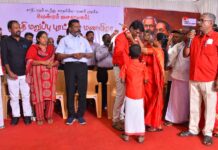
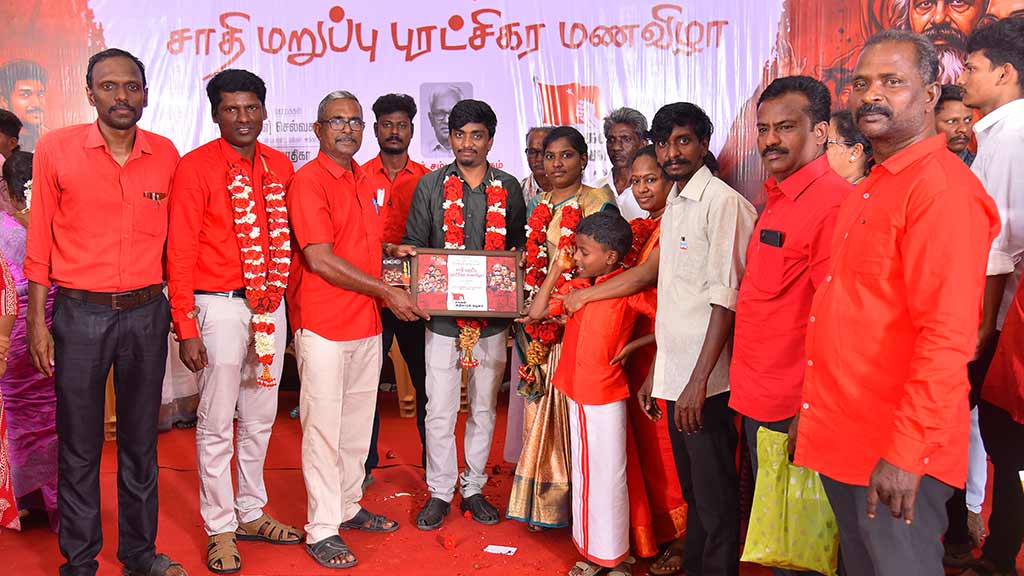
As a continuation of this legacy, the “Caste-Denial Revolutionary Marriage” of comrades Radhika and Ravi took place on December 28, 2025. In particular, this marriage was conducted in a manner that accurately identifies the need to wage an alternative-cultural war against the honour killings and caste-based attacks unleashed by reactionary forces upon this changing society.
Significantly, the slogan chosen for this marriage — “To love and marry beyond caste, religion Need Democracy!” — strongly emphasizes the need for a genuine democratic space.
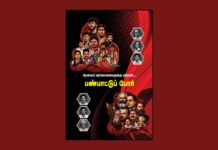
Similarly, the marriage invitation, printed with photographs of Ilavarasan, Shankar, and Kavin, who were victims of honour killings, deeply moved those who saw it. The marriage took place by recognizing these martyrs, who lost their lives in this cultural war against caste dominance, as the heroes of the uprising against caste domination and placing them at the forefront.
While it is customary to include photographs of Marxist icons, political leaders, or ancestors on marriage invitations, printing the invitation with photographs of honour killing victims created a significant impact on many. In particular, Kavin’s mother was deeply moved upon seeing her son’s photograph featured on the marriage invitation.
As an expression of all these sentiments youth, women, the public, and democratic forces voluntarily came forward to campaign for this marriage. They took part in the arrangements, and arrived at the venue in waves. In total, more than three thousand people participated in this event.
Women and youth voluntarily came forward to attend the marriage. Many attended the event with their partners. The marriage inspired in them the feeling that they too should get married in this manner. This serves as recognition for this political initiative and is a manifestation of the hope sown within them.
Significantly, the participation of leaders such as Comrade Thol. Thirumavalavan (President, Viduthalai Chiruthaigal Katchi), Comrade S.K. Murugavel Rajan (President, Makkal Viduthalai Katchi), Comrade Jakkaiyan (President, Aadhi Thamizhar Katchi), Comrade Venmani (President, Dravida Thamizhar Katchi), and Comrade K. Marimuthu (Organizer, Makkal Viduthalai Munnani) proclaims the recognition this marriage has received among the Dalits. Furthermore, these leaders emphasized at the marriage the need to unite beyond the electoral arena to prevent honour killings and caste-based attacks, and to defeat fascist forces.
Overall, this marriage took place emphasizing the annihilation of caste and the need to create an egalitarian society by eradicating class inequality. This marriage serves as the starting point for a cultural war, aiming to present a proper alternative in the cultural sphere to the uprising emerging among Dalits against caste dominance.
This movement will proceed to subsequent stages. It will sow the seeds for a social change that secures social recognition for those who love and marry transcending caste and religion. This revolutionary marriage day, which laid the foundation for this, is the Day of Cultural Uprising against honour killings.

Editorial team, Puthiya Jananayagam
(Puthiya Jananayagam – January 2026 issue)
Follow us on social media:
WhatsApp, X (Twitter), Facebook, YouTube, Telegram, Instagram