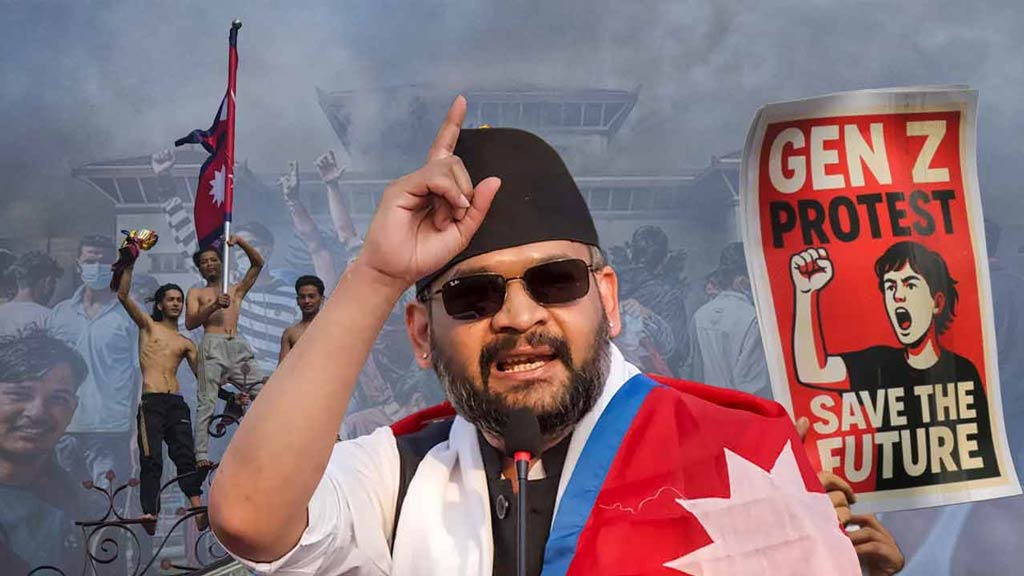
In Nepal’s recently concluded parliamentary elections, the Rastriya Swatantra Party (RSP) led by Balendra Shah has secured an outright majority, winning 182 of the total 275 seats. This is the first time in approximately 27 years that a single party has formed government with such a decisive mandate. What makes this even more striking is that the RSP was founded only five years ago, with anti-corruption as its founding plank. For this reason, the ruling class media has been portraying the general election held on March 5, 2026 as a significant turning point in Nepal’s political history.
The Nepal Congress (NC), which had governed Nepal for decades by alternating in power with other parties, managed only 38 seats. The Communist Party of Nepal Unified Marxist Leninist (CPN-UML) won 25, and the Maoist Centre was reduced to 17. The people have dealt a death blow to these opportunist political parties that had long been deceiving them.
The Nepal Communist Party (Maoist Centre) led by Prachanda is a particularly telling case. This was the party that had come to power by overthrowing the monarchy. It then went on to betray the people, abandon the revolution, and sink into opportunism. It formed coalitions with other opportunist parties and became entangled in the rot of parliamentary politics. As a result, Nepal’s long-standing political crisis was left festering without resolution. The economy, already in freefall, deteriorated further; Unemployment intensified. On top of all this, every party became publicly exposed in corruption and scandal, and they began to stink of it.
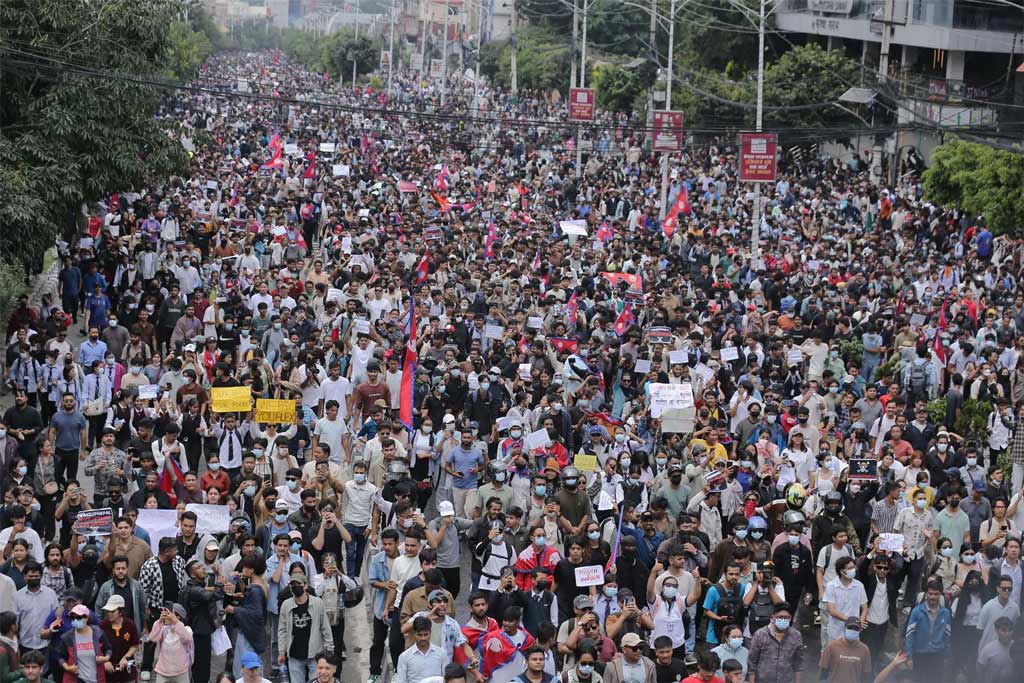
It was in this context that in September 2025, a Gen-Z youth uprising that began as a protest against the banning of social media grew into a broader movement against unemployment and oppression. State violence claimed the lives of more than 70 young people, yet the movement only gained more massive popular support. Rattled by the scale of the uprising, KP Sharma Oli of the CPN-UML resigned from the post of Prime Minister.
With the traditionally ruling parties utterly discredited and estranged from the people, the RSP has done what populist forces typically do. It seized power by riding the wave of popular anger and resentment, once again foregrounding anti-corruption rhetoric to its advantage.
This government led by Balendra Shah must be understood for what it truly is. It is a calculated arrangement to pacify and channel people’s rage through populist schemes and superficial administrative reforms, cutting off the fighting spirit of the masses before it overflows into something the ruling class cannot contain.
Balendra Shah’s announced 100-point administrative reform agenda, the digitisation of public services, and gestures like seeking public apologies to Dalits and historically oppressed communities are all rooted in populist, corporate-driven policy. Through such measures, the deeply entrenched class contradictions in Nepali society and the oppression perpetuated by dominant-caste Khas-Arya structures can never be genuinely resolved.

At the same time, this populist RSP government has, in the name of administrative cleanliness, ordered the dissolution of all student unions operating in educational institutions, and banned government officials, teachers, and other state employees from maintaining any affiliation with political parties. This is a severe repressive measure designed to drive the people and the youth away from politics entirely, to ensure they never again enter the arena of struggle.
Nepal is also currently caught in the crossfire of competing hegemonic ambitions between US and Chinese imperialism. China’s Belt and Road Initiative and projects like the Pokhara International Airport are debt-trap schemes dressed up as development, and they have placed Nepal’s sovereignty under serious question. Meanwhile, the fascist Trump administration in the United States has cut off USAID funding and is threatening to bring Nepal firmly within its military and political grip. In this situation, by announcing a so-called development diplomacy and a non-aligned posture that is non-aligned only for namesake, the Balendra Shah government is in effect preparing to turn Nepal into a hunting ground for competing imperialist powers.
It is also worth noting that the first congratulatory message Balendra Shah received after assuming office came from Indian Prime Minister Modi. The RSS-BJP mob, marching steadily toward its dream of an Akhand Bharat, is actively working to restore the Hindu monarchy that was dismantled in Nepal. Through its saffron terror outfits such as the VHP and Bajrang Dal, India is stoking communal hatred and operating as the backstage power backing reactionary forces like the Rastriya Prajatantra Party (RPP). The RSP government has neither the will nor the capacity to resist this RSS infiltration.
In sum, the RSP government under Balendra Shah is a populist regime designed to suppress the people’s boiling anger. It conceals the brutal face of the ruling class while simultaneously deploying attractive schemes and repressive measures in the same breath. The Nepali ruling class is congratulating itself for having found a convenient backdoor to advance its own interests. But none of the political and economic crises it faces can be resolved in any meaningful way by the ruling class itself. On the contrary, this trajectory will only pave the way for one faction of the ruling class to shed all democratic pretences and establish a fascist state that unleashes savage repression upon the people. The RSS infiltration currently underway aligns precisely with this trajectory.
It is therefore the duty of revolutionary democratic forces to expose and unmask the populist rule of Balendra Shah’s RSP for what it is: a regime laying the groundwork for fascism. The task before them is to put forward an alternative political and economic programme that upholds the rights of working people and to build people’s struggles around it.

Mathi
(Puthiya Jananayagam – May 2026 Issue)
Follow us on social media:
WhatsApp, X (Twitter), Facebook, YouTube, Telegram, Instagram, Threads